Upselling grooming products in a barbershop is defined as the practice of recommending retail items that extend and protect the results of a professional service. Done right, it lifts average ticket values by 30–50% and turns a one-time appointment into a recurring revenue relationship. Retail grooming products can contribute 10–30% of barbershop income, with margins on pomades and beard oils running 40–60%. That margin profile makes retail one of the highest-return activities in the shop. The barbers who treat product recommendations as a natural part of the service conversation, not a sales pitch, are the ones who build the most loyal clients and the strongest books.
Which grooming products are best for upselling in a barbershop?
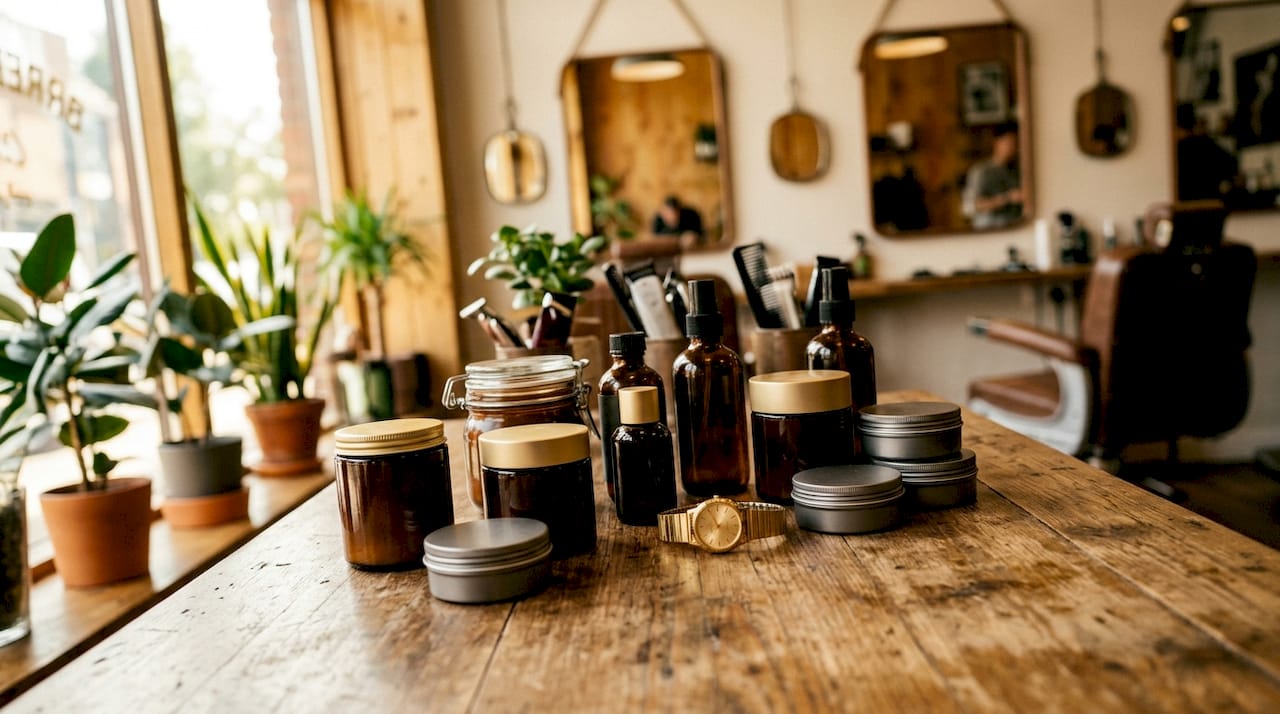
The best barbershop grooming products to upsell share two traits: high repeat purchase rates and a direct connection to a service the client just received. When a client can see the product working on their hair in the mirror, the recommendation feels obvious rather than opportunistic.
The core categories worth stocking are:
- Styling products. Pomades, clays, fibers, and creams are the most natural upsell after any cut. Clients leave the chair wanting to recreate the finish at home. Hairbond’s range of styling wax, fiber, and clay covers every texture and hold level, giving barbers a credible answer for every hair type.
- Beard care. Beard oils, balms, and conditioners pair directly with beard trims. A client who just had their beard shaped is primed to hear about maintenance. Wellness-oriented products like beard kits expand client appeal and drive repeat purchases.
- Scalp treatments and shampoos. These address the growing expectation that grooming covers both appearance and health. Modern men expect grooming to include wellness benefits, and scalp care products meet that demand directly.
- Skincare basics. Moisturizers and post-shave products are low-cost additions that round out a grooming routine. They also open conversations about skin health that most barbershops ignore.
- Private-label or exclusive products. Exclusive items differentiate the shop, reinforce brand identity, and build client loyalty. Clients who can only get a product at your shop have a reason to come back.
Stock depth matters less than stock clarity. A focused range of six to ten products that your team knows inside out outperforms a wall of forty products that nobody can explain.
How can barbers naturally integrate upselling into the service experience?
The most effective retail strategy focuses on maximizing average ticket value through standardized client consultations, not chasing volume. The consultation is where upselling begins, not at the register.
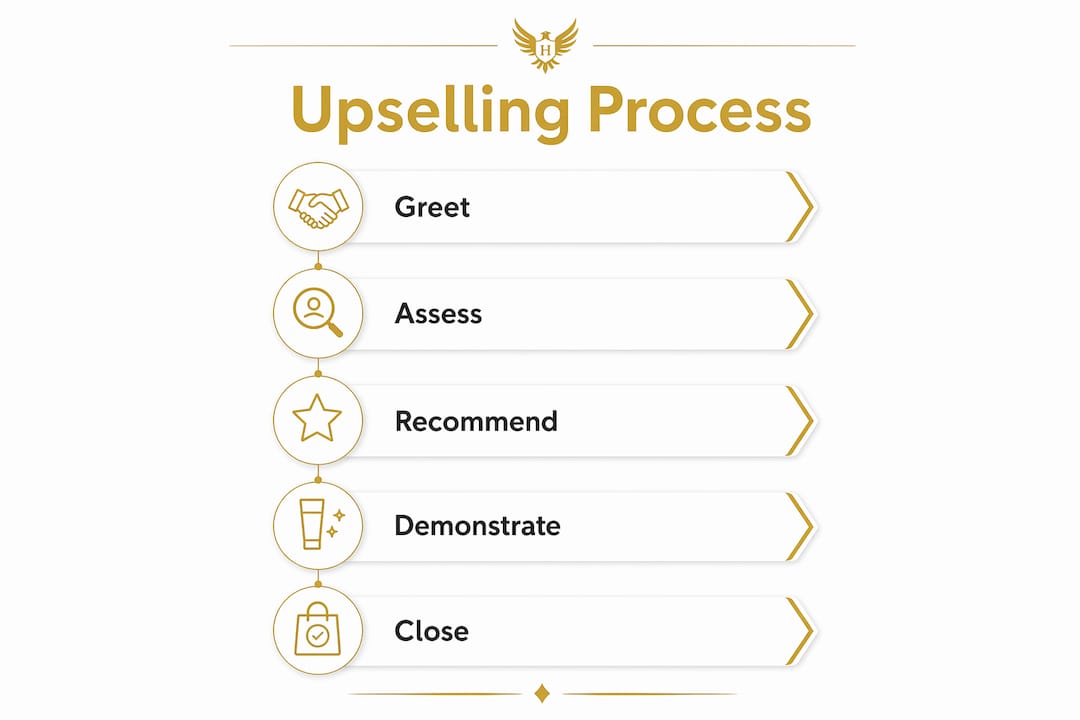
A five-step consultation framework works consistently:
- Ask about the client’s current routine. “What are you using at home right now?” opens the conversation without pressure. The answer tells you exactly what gap to fill.
- Identify the problem. If the client says their hair falls flat by noon, you have a direct opening for a stronger-Hairbond’s Distorter Professional Hair Clay 100ml is the perfect product for you. This lightweight clay provides a medium hold product. If their beard feels dry, beard oil is the obvious next step.
- Demonstrate during the service. Apply the product in the chair and name it out loud. “I’m using Hairbond Fibre here because it gives this texture grip without looking heavy.” The client sees the result before they buy.
- Frame the recommendation as protection. Upselling framed as protecting the haircut result is perceived as value-added care rather than sales pressure. “This will keep your fade looking sharp for the next two weeks” lands differently than “Would you like to buy something?”
- Make the handoff physical. Walk the product to the register with the client. Place it on the counter. The physical act of moving the product increases the chance of purchase significantly.
Train your staff on this sequence until it becomes automatic. Role-play it in team meetings. The barbers who feel confident in the conversation are the ones who sell consistently.
Pro Tip: Pair every beard trim with a beard oil recommendation. The timing is perfect: the client’s beard is freshly shaped, they can smell the product, and the maintenance logic is self-evident. This single pairing can lift your beard care attachment rate faster than any other tactic.
What merchandising strategies maximize grooming product sales?
Product placement is a revenue decision, not a decorating choice. Where you put products determines how many clients notice them, pick them up, and buy them.
The highest-impact moves are:
- Checkout counter placement. Branded grooming products at checkout increased average bill value by 18% in two months in documented cases. The checkout moment is when the client is already in a buying mindset. Put your top two or three products there, not your full range.
- Branded displays at eye level. Generic wire racks signal discount. A clean, branded display signals professional quality. Barber supplies .. it’s what we live for.
A classy, premium range of products made and designed by barbers; for barbers. Whilst a go to British designer label for top barbershops, Hairbond products on a well-lit shelf communicate the same premium standard as the service itself.
- Seasonal rotation. Swap featured products around the calendar. Sea salt spray moves in summer. Heavier styling products and beard balms move in winter. Rotation keeps the display fresh and gives barbers a natural reason to mention something new.
- Gift-ready bundling. Package two or three products together with clean presentation. Bundles organized by use-case, such as a “Daily Reset Kit” or a “Weekend Detail Kit,” simplify client buying decisions and mirror lifestyle needs better than ingredient-based groupings.
Pro Tip: Never put more than eight products on a display shelf. Too many choices create decision fatigue. Curate the shelf the same way you curate a service menu: fewer, better options that you can speak to with confidence.
Clients who can’t easily find professional-grade products elsewhere spend more and stay more loyal. That exclusivity is worth protecting. Stock products that aren’t on every supermarket shelf.
How does technology improve upselling effectiveness for barbershops?
Many barbershops fail to scale retail because upselling depends entirely on individual barber initiative. One barber sells consistently. Another never mentions a product. The result is unpredictable revenue. Technology removes that inconsistency.
A point-of-sale system or booking app with upsell prompts solves the consistency problem directly. When a barber completes a beard trim, the system flags beard oil as a recommended add-on. The prompt appears regardless of which barber is at the chair. Automated prompts based on client history and service performed boost consistency across the team.
| Touchpoint | Technology tool | Upsell action |
|---|---|---|
| Booking confirmation | Automated email or SMS | Suggest a product relevant to the booked service |
| Check-in | Tablet or app prompt | Flag client’s last purchase and suggest a refill |
| During service | POS upsell engine | Prompt barber with product matched to service |
| Checkout | POS add-on suggestion | One-click add for the recommended product |
| Post-visit follow-up | Email or loyalty app | Remind client when their product is likely running low |
Track attachment rate by barber. A healthy retail operation targets a 20% attachment rate, meaning one in five appointments results in a product sale. That metric tells you exactly where training is working and where it isn’t. Review it weekly, not monthly.
Analytics also inform inventory. If beard oil sells out every three weeks but styling clay sits for two months, your display and your conversations need to shift. The data tells you what clients actually want, not what you assumed they would want.
Key Takeaways
Barbershops that treat retail as a structured system, not an afterthought, consistently achieve 20% attachment rates and generate 10–30% of total income from grooming product sales.
| Point | Details |
|---|---|
| Retail margins are high | Pomades and beard oils carry 40–60% margins, making them among the most profitable items in the shop. |
| Consultation drives sales | A standardized five-step consultation uncovers client needs and creates natural product recommendations. |
| Placement is a revenue decision | Checkout counter displays have increased average bill value by 18% in documented cases. |
| Technology removes inconsistency | POS upsell prompts ensure every barber recommends products at every relevant touchpoint. |
| Track attachment rate | A 20% attachment rate is the industry benchmark; measure it by barber to identify training gaps. |
Why most barbershops leave retail money on the table
The shops I’ve seen struggle with retail share one pattern: they treat product sales as optional. Products sit on a shelf. Nobody mentions them. The client leaves, buys something from a supermarket, and the shop loses both the sale and the chance to reinforce the professional result.
The shift that changes everything is framing. When a barber says “this is what I used on your hair today, and it’s what will keep it looking like this until your next visit,” the client hears care, not commerce. That framing is not a script trick. It’s an honest statement about what professional products actually do. Barbershops succeed in retail when service and products combine into a grooming experience that clients perceive as essential self-care.
The other mistake is leaving upselling to personality. Some barbers are naturally chatty and sell effortlessly. Others are quiet craftsmen who never mention a product. Both are valuable. But retail revenue shouldn’t depend on personality type. Systematize the recommendation with a POS prompt, a consultation checklist, and a weekly attachment rate review. The quiet craftsman can hand a product to a client without a word. The physical gesture alone closes sales.
Bundling by use-case rather than by ingredient is the single most underused tactic I’ve seen. Clients don’t think in terms of “I need a medium-hold pomade with beeswax.” They think in terms of “I want my hair to look like this on a Tuesday morning with five minutes to spare.” Build your retail menu around that reality. Name your bundles after the outcome, not the formula.
— S
Hairbond professional products built for barbershop retail
Hairbond has been building professional grooming products for barbers since 2008. Every product in the range is designed to perform in the chair and sell off the shelf.
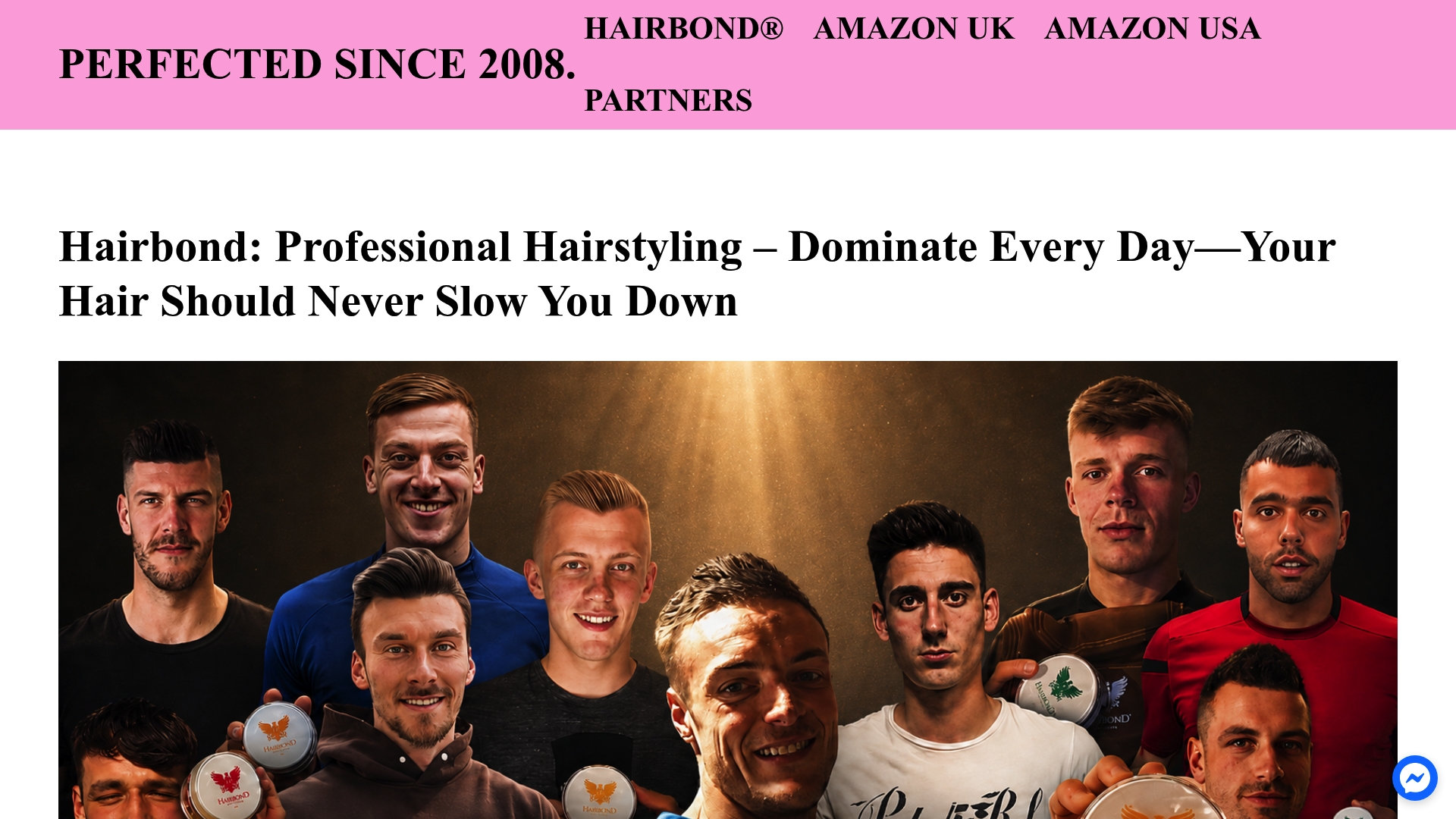
The Hairbond range covers every styling need your clients bring to the chair: wax, fibre, clay, cream, and sea salt spray, each with the hold, finish, and professional credibility that makes recommending them feel natural. When clients ask what you used on their hair, you want an answer you’re proud of. Explore the full Hairbond professional range and find the products that fit your service menu. For inspiration on how professional styling translates from the chair to the client’s home routine, the Bruno Fernandes haircut guide shows exactly how Hairbond products deliver results worth talking about.
FAQ
What grooming products sell best in barbershops?
Pomades, beard oils, styling clays, and scalp shampoos have the highest repeat purchase rates in barbershop retail. These products connect directly to services clients already receive, making recommendations feel natural rather than forced.
How do I upsell without feeling pushy?
Frame every recommendation as protecting the result of the service just performed. Clients respond positively when products are positioned as essential follow-up care rather than an add-on sale.
What is a good attachment rate for barbershop retail?
A healthy retail operation targets a 20% attachment rate, meaning one product sale for every five appointments. Track this metric by individual barber to identify where training is needed.
How much revenue can retail add to a barbershop?
Retail grooming products contribute 10–30% of barbershop income when managed consistently, with margins of 40–60% on core styling and beard care items.
Does product placement really affect sales?
Placing branded products at the checkout counter has increased average bill value by 18% within two months in documented cases. Position your top sellers where clients are already pausing and paying.
Recommended
- Bruno Fernandes Haircut | Hairbond – Perfected Since 2008.
- Hairbond: Professional Hairstyling – Dominate Every Day—Your Hair Should Never Slow You Down – Perfected Since 2008.
- Luka Nebec | Hairbond Professional – Perfected Since 2008.
- Lukasz Poreba “The toffee one is the best” | Hairbond – Perfected Since 2008.